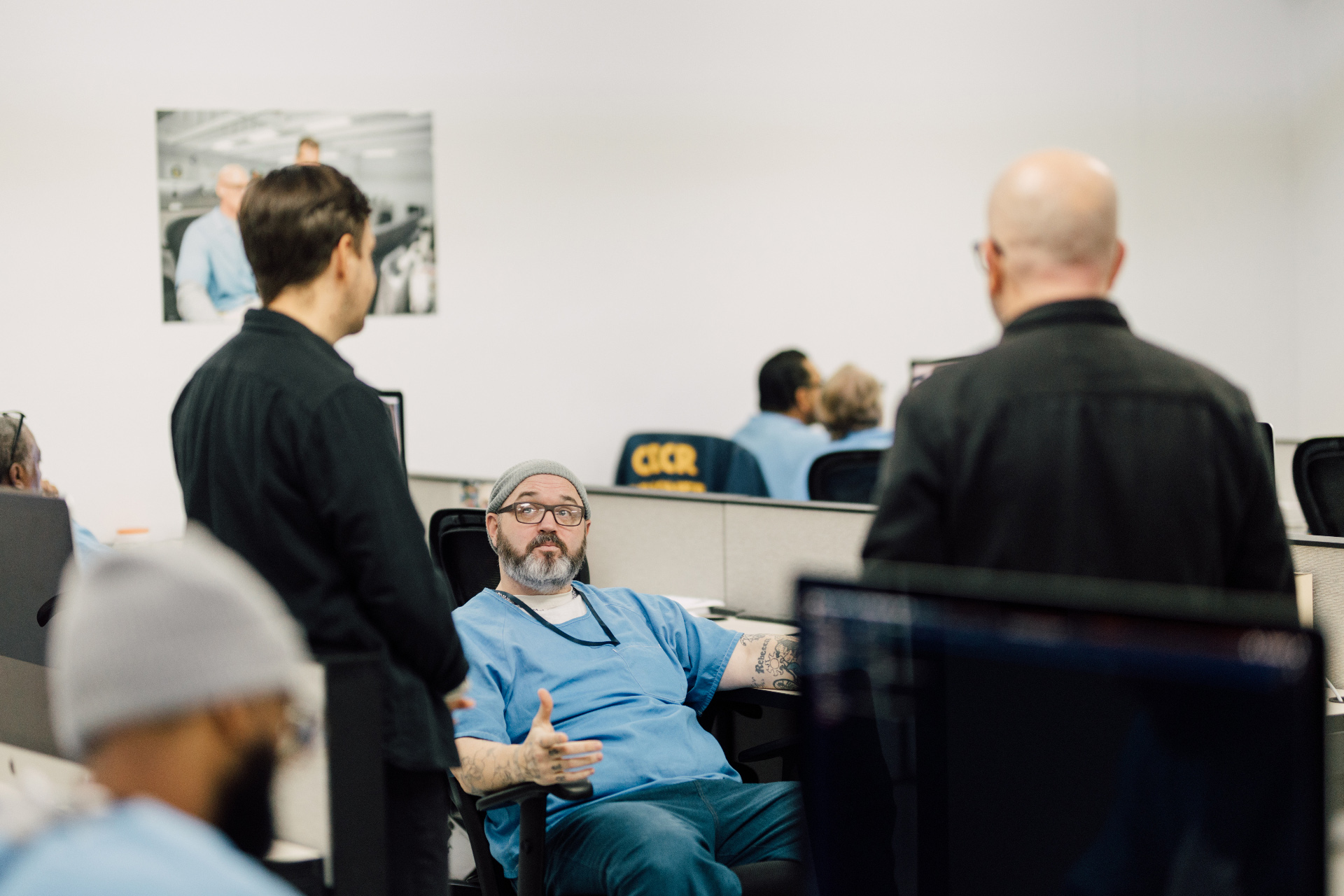
In 2025, The Last Mile went beyond preparing people for jobs after prison.
Now, we prepared them for a rapidly changing world.
The Last Mile was founded to equip individuals with marketable skills for gainful employment, recognizing that jobs are crucial to successful reentry and breaking the cycles of incarceration. In 2025, the organization continued to adapt its mission-driven work to the changing world, focusing on both lived experiences and available opportunities.
This report highlights a year of capacity building, strategy refinement, and program alignment with reentry realities. It marks a transition to the next phase of the organization’s mission, grounded in evidence and the belief that effective rehabilitation is achievable.

Dear Friends and Supporters,
My father taught me that showing up is 90% of the work. It sounds simple, but I have carried that with me my entire life — and I see it proven true every single day by our students. These are people navigating enormous obstacles just to walk into a classroom, sit down, and do the hard work of learning. They do not have to. They choose to. That choice, made consistently, day after day, is the foundation on which everything else is built. It is what I am most proud of, and it is where I want to start this report.
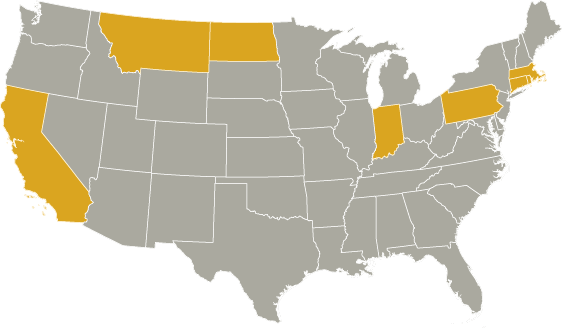
2025 was a year of building — sometimes quietly, sometimes against real headwinds. We deepened our curriculum to meet a rapidly evolving labor market, expanded our PATH framework to include project management, sales, and entrepreneurship, and invested in the infrastructure required to make our model work consistently across 20 classrooms in 9 states. A meaningful addition to PATH this year was the introduction of a Google Workspace simulator, giving students hands-on experience with the tools they will encounter on day one of any modern job — in an environment where live internet access is unavailable. None of this happened in a straight line. We made hard decisions about what to prioritize, and our team delivered.
I came to this work through a door that many of our students will recognize. My own history with the justice system is not background noise — it is the source of my clarity about what is at stake. When I walk into a classroom inside a prison, I am not a visitor. I know what it feels like to believe that the opportunities available to other people are not available to you. I also know what it feels like to be proven wrong about that. The Last Mile exists to prove that wrong, at scale, with evidence.
This report tells the story of Alysha Eppard, who walked out of prison in September 2024 and is today building web features for the Indiana Pacers — a role that came to her through skill, discipline, and a partnership between The Last Mile and a team that believed in fair-chance hiring. Alysha’s story is not a miracle. It is a result. It is what happens when someone is given real tools, real preparation, and real support. It is what our 5% recidivism rate looks like in a single human life.
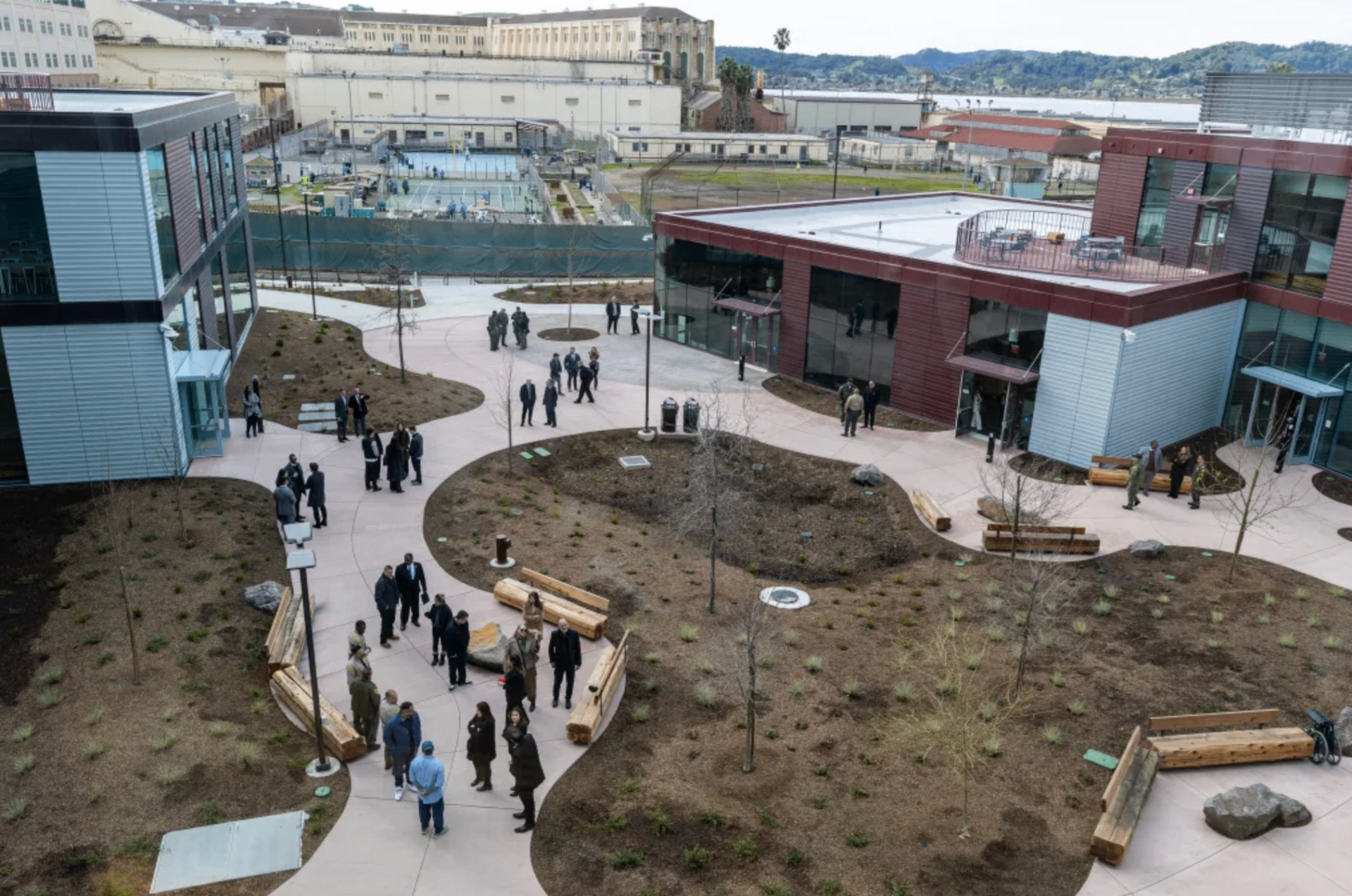
On March 24, 2026, our learning center at San Quentin Rehabilitation Center officially opens — a milestone that marks something larger than a single facility launch. Alongside it, we are actively testing our Service Delivery Platform, the infrastructure that will allow multiple educational partners to deliver instruction within a single secure network. This is still early-stage work, and we are learning as we go. But the potential is significant, and we believe it has real implications for how correctional education is delivered at scale. California has built something worth replicating. The Last Mile intends to help replicate it.
As we move into 2026, we carry this year’s groundwork forward with real momentum. New state partnerships are taking shape. Employer relationships are deepening. And our curriculum is evolving to meet the moment — we are actively working to launch an AI curriculum that prepares students for a workforce being reshaped by automation, and to develop skilled trades partnerships that will open pathways into industries where demand is high and opportunity is real. Because the economy does not wait, and neither can the people we serve.
None of this is possible without you. Thank you to our funders, partners, volunteers, correctional agency colleagues, and employer champions who show up for this work. Thank you to our staff, who bring both rigor and humanity to everything they do. And most of all, thank you to our students and alumni — past, present, and future — who remind us daily that transformation is not a program outcome. It is a choice. We are honored to be part of the journey.
With gratitude and purpose,
Kevin McCracken
Executive Director, The Last Mile
The United States has one of the largest incarcerated populations globally, with millions cycling through prisons and jails yearly, affecting families and communities. Despite significant investment in incarceration, recidivism rates remain high, indicating a focus on punishment rather than reintegration. The financial costs are high, but the human costs are even greater, as time in prison often harms employment prospects, disrupts families, and diminishes social capital. Without proper intervention, release from prison often leads to instability instead of successful reintegration.
Reentry into society faces various barriers beyond individual motivation, including employment restrictions, housing limitations, debt, and limited educational access. Many return home without reliable support or paths to economic stability.
Traditional reentry models often handle these issues separately, focusing on immediate needs while neglecting long-term stability. Educational and program support usually ends at release, leading to unstable outcomes despite initial progress.
Employment is crucial for successful reentry, providing stability, income, and a sense of belonging. When combined with preparation and support, it reduces the risk of reoffending and enhances community well-being.
The Last Mile integrates education, reentry support, and employer engagement into a cohesive system to promote lasting positive outcomes.
In 2025, The Last Mile focused on strengthening the systems that support consistent outcomes across the country:

Students Enrolled
Volunteers Engaged
Employment Rate
Returned Citzens
Employment Partners
Recidivism Rate
The rapid rise of artificial intelligence and automation has transformed labor markets in the United States, particularly affecting entry-level and technical jobs that used to provide pathways to economic stability for justice-involved individuals. As traditional job categories have changed or declined, reliable routes to employment have become less accessible, even for skilled individuals.
The Last Mile responded by strengthening systems for lasting outcomes. We expand our curriculum to include skills needed in more resilient industries and enhanced reentry support as an ongoing process rather than a one-time event. We also improved our technology infrastructure to ensure scalability and consistency across facilities and states.

The PATH framework offers various pathways into the workforce, helping students develop essential digital literacy along with skills in project management, sales, and entrepreneurship. This approach enables individuals to identify their strengths, build confidence, and pursue opportunities that align with market demands and personal goals.
Education in these facilities focuses on preparing individuals for a dynamic economy, emphasizing adaptability, communication, and problem-solving skills.
Students gain essential skills to succeed in modern workplaces, focusing on digital productivity, technical documentation, coding standards, and secure online practices. This prepares them to use workplace tools, collaborate remotely, and produce work that meets industry standards. Emphasis is placed on organization and communication, equipping students for roles that require digital fluency. Additionally, an AI literacy component is integrated, promoting the use of workplace simulators to enhance problem-solving skills and adaptability in a technology-driven environment.
The Project Management track equips students with the frameworks and methodologies for planning, executing, and delivering complex projects across various industries. Students will explore project lifecycle management, stakeholder coordination, and Agile and Waterfall methodologies, along with professional execution tools. The curriculum emphasizes structured thinking, accountability, and collaboration, providing graduates with transferable skills for technology, business operations, and skilled trades.
The Sales pathway develops key communication, relationship-building, and problem-solving skills essential for success in professional roles. Students study buyer psychology, ethical sales practices, and storytelling techniques to create value. The curriculum emphasizes empathy and active listening, preparing graduates to confidently engage with clients and stakeholders where communication and trust are vital for success.
Entrepreneurship training develops the strategic and personal skills needed to identify opportunities in uncertain environments. Participants learn business modeling, market analysis, and pitching while enhancing their emotional intelligence and resilience. The curriculum promotes personal accountability and adaptability, helping students clarify their professional goals and respond positively to setbacks, ultimately building confidence for leadership and innovation.
Education in correctional facilities gives individuals the technical and professional skills needed for successful reintegration. Experiential learning allows students to apply their knowledge in real-world-like settings.
Experiential learning at The Last Mile emphasizes active participation. Students engage directly with professionals, gain industry insights, and apply their communication, problem-solving, and project skills in real-world settings. This approach enhances classroom learning and helps students understand professional environments, teamwork, and workplace expectations. It also reduces the psychological gap between incarceration and employment, allowing students to see themselves as future colleagues rather than just applicants.

The partnership with Apple emphasizes experiential learning to help students grasp modern professional workflows and creative problem-solving. Through organized sessions, Apple volunteers engage with students, focusing on collaboration and practical thinking. These interactions provide insights into high-performing team dynamics and highlight the importance of adaptability and continuous learning in technology-driven fields.
The partnership with LAAW offers students insights into the legal and professional frameworks affecting employment and entrepreneurship outside of prison. Through workshops and interactions with professionals, students gain real-world experience that enhances their decision-making and bridges the gap between theory and practice.
Reentry at The Last Mile is a continuous process that begins before release and extends beyond initial employment. Alumni receive individualized support in housing, job readiness, education, and stability.

Apprenticeship partnerships bridge the gap between education and long-term employment. They provide structured pathways for alumni to gain work experience while receiving mentorship and professional development. This model allows employers to confidently engage in fair chance hiring, while alumni build skills in supportive environments aimed at long-term success.
The Last Mile’s 72-hour reentry protocol ensures critical support during the most vulnerable transition period:
Long-term stability involves more than just getting an initial job. The Last Mile’s approach emphasizes ongoing growth, education, and community engagement to support alumni over time. Graduates connect with a national network built on shared experiences and mutual support, participating in virtual events and in-person gatherings to celebrate milestones like job achievements and educational advancements.
Their career development follows a structured path focused on economic mobility:
Alysha Eppard still remembers the first time she walked into the Pacers organization as an employee. Months earlier, she had been inside a prison classroom interviewing for the opportunity that would change her life.
Like Billie Edison before her, Alysha’s story shows what can happen when transformation meets opportunity. Her path began with addiction and incarceration. It led through years of hard work, sobriety, and education inside prison walls.
Today, she is thriving within the Indiana Pacers organization through a groundbreaking apprenticeship program.
Alysha’s early life moved quickly toward adulthood. She became a mother at seventeen while navigating addiction and instability. “I got pregnant when I was 17,” she said. “My daughter’s dad was on drugs… and we fell really far into addiction.”
The environment around her normalized destructive choices. Selling drugs became a way to survive and maintain independence. At twenty years old, everything collapsed. Alysha was arrested after being set up by someone she trusted.
The charges were severe. Eventually she received a 30-year Department of Correction sentence. The courtroom moment still stays with her. Watching her family react to the sentence felt devastating. “I had to see every single person that I cared about get their heart broken in the courtroom,” she said.
Prison forced Alysha to confront her life, and she focused all her attention on recovery programs helped her become sober and begin the deeper work of rebuilding herself. “I decided I was going to use this time to get everything I can out of it,” she recalled. “I was going to make sure that I did not end up back in prison,” she said.
Sobriety became the foundation of Alysha’s transformation. She committed herself fully to recovery programs inside the facility. While many participants rushed to finish and return home, Alysha took a different approach.
In a remarkable feat of dedication, Alysha attended 354 daily meetings in a row. “My mind state was, I’m not going to get to go home right after this,” she explained. “So I’m going to use this time to get everything I can out of it.” She attended meeting after meeting, sometimes speaking at every one.
That disciplined mindset quickly expanded into Education. She rapidly earned her GED and discovered a love for problem-solving, and found she was hungry to learn more. When The Last Mile coding program arrived at Rockville Correctional Facility, a fellow student encouraged her to try it.

“I didn’t know a thing about coding, but I felt this is something I can actually be good at,’” Alysha said.
Learning to code felt overwhelming at first. The concepts were unfamiliar, and the pace pushed everyone in the classroom to stretch their thinking. Over time, the structure of programming began to make sense. Each challenge became an opportunity to solve a new puzzle.
That breakthrough moment arrived the first time she completed a full project. “That first time that I finished a project, I was amazed. I thought, ‘Oh my gosh, I really can do this,’” she said.
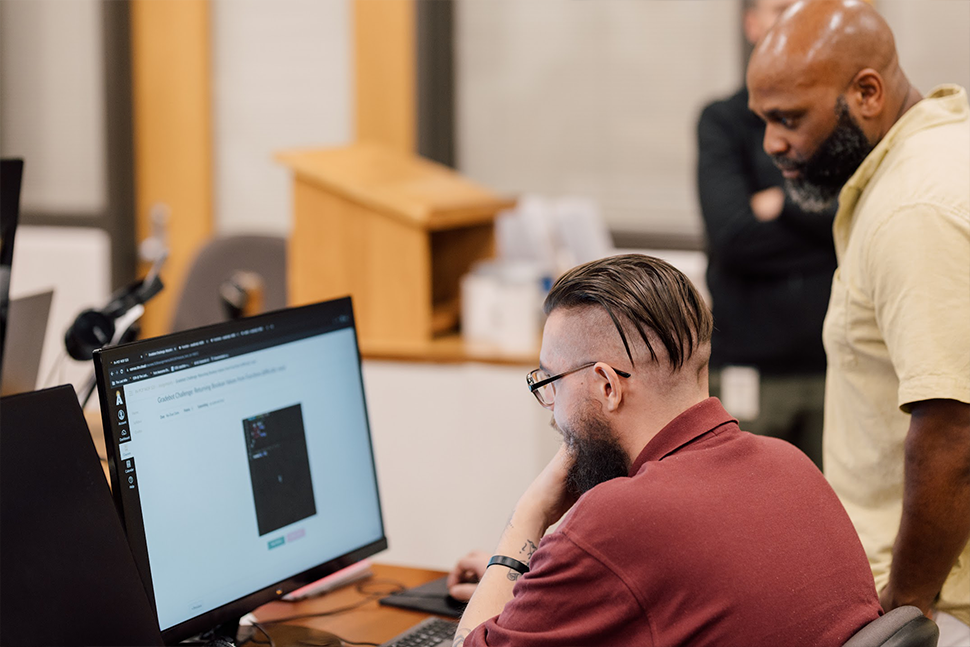
The classroom quickly became a place where Alysha thrived. She enjoyed the logic and problem-solving that coding demanded. As her confidence grew, she began helping classmates work through difficult concepts and debugging problems in their code.
“I helped my peers wherever I could. It’s something that I enjoy doing,” she said.
Her instructors recognized that leadership early. After graduating from the program, Alysha returned to the classroom as a teaching assistant. For more than two years, she mentored new students and guided them through the same difficult lessons she had once struggled with.
The role deepened her understanding of the material. Teaching others forced her to think about problems from multiple angles. It also allowed her to share the confidence she had gained.
“I’ll put my all into your project if you put your all into your project,” she told her students.
By the time she left the classroom, Alysha had developed both technical skills and the ability to lead others through complex challenges—skills that would soon carry her far beyond the prison walls.
As Alysha approached a possible return to court, another opportunity began to take shape.
The Indiana Pacers organization had recently partnered with The Last Mile to explore hiring graduates from the program. Billie Edison had already helped open that door. Now Alysha had the chance to follow a similar path.

Before she even left prison, Alysha was invited by The Last Mile to interview with the Pacers while still inside the facility. “It was right before I got out,” she said. “I did my first interview with the Pacers from inside the prison.”

Suddenly, the years Alysha spent developing new skills and mentoring others could translate into a real career on the outside. That possibility soon became part of the conversation in the courtroom.
When Alysha returned before the judge, he immediately saw the transformation.
“The Judge looked at me and immediately told me, ‘You look so much better. You look so much happier,’” Alysha recalled. After hearing about her accomplishments and the Pacers’ opportunity, the judge granted her release. Alysha walked out of prison in September 2024.
Months later, the Pacers created a new apprenticeship program to bring her onto the team. The opportunity marked a powerful moment for Alysha and for fair-chance hiring.
“They told me they were really impressed with my accomplishments,” she recalled. “They wanted to find a way to hire me, and that was the start of the apprenticeship program.”
Today, Alysha contributes to the Pacers’ digital team. She builds web features, solves technical problems, and continues developing new skills every day.
“I can take anything they give me. It doesn’t matter what, I will just crush it,” she said with a smile.
Recognition soon followed. Alysha was nominated for the organization’s “Assist Award” for going above and beyond on a sustainability event project.
“When you have a background like mine, getting recognized… is huge,” she said. “I already thought I’d never be here.”
Alysha transformed her life through discipline, education, and the support of The Last Mile. Her story shows that talent exists everywhere, even inside prison walls.
When the judge granted her release, he made something clear that Alysha has never forgotten.
“Don’t thank me,” he told her. “Thank yourself. You did this. You did exactly what you’re supposed to do when you go to prison. You’re the one that brought you home.”
Today, Alysha’s journey stands as part of a growing movement. Every opportunity like hers expands the pathway for others who are working to rebuild their lives and prove what they are capable of.
Turn2U Productions was founded to address a key challenge for justice-impacted individuals after release: access to stable employment. While education and reentry support create opportunities, long-term stability depends on earning income and gaining experience. Social enterprise offers a model that connects these outcomes to our mission.
A social enterprise combines business sustainability with social impact. Unlike traditional nonprofits that depend on donations or businesses focused solely on profit, social enterprises generate revenue and reinvest it into community outcomes. In reentry contexts, they create job opportunities, support career development, and promote financial independence while strengthening their programs. By aligning economic activity with social impact, social enterprises create systems that reduce dependence on external hiring trends and broaden access to opportunities. Read more here
Turn2U Productions represents this model in practice. Turn2U is a for-profit enterprise that provides fair chance employment for graduates and supports The Last Mile’s mission. A portion of its revenue funds education and reentry programs, creating a cycle where business growth leads to more opportunities for students and alumni. Each project completed benefits both clients and the development of pathways out of incarceration.
Turn2U aims to provide justice-impacted professionals with opportunities to build skills, advance their careers, and participate in equity ownership as the organization grows. By offering ownership opportunities, Turn2U promotes long-term financial stability and wealth-building beyond salaries. This reflects a vision of inclusive capitalism, where everyone who contributes to the organization shares in its success.
In 2025, Turn2U expanded its services to meet market demand and leverage skills from The Last Mile’s training programs. Now offering website development and short-form content creation alongside promotional products and branded merchandise, Turn2U enables clients to work with one partner for their digital presence and brand activation.
Turn2U’s original service offering provides custom apparel, promotional products, printed collateral, and fulfillment services. From branded merchandise to complete swag packages, Turn2U delivers purpose-driven promotional products with professional quality.
Turn2U’s web development team leverages skills built through The Last Mile’s coding curriculum to deliver modern, responsive websites.
Scroll-stopping Reels, TikToks, and social content — made with purpose. Turn2U’s content team produces professional-quality video and digital content that helps organizations tell their stories effectively.
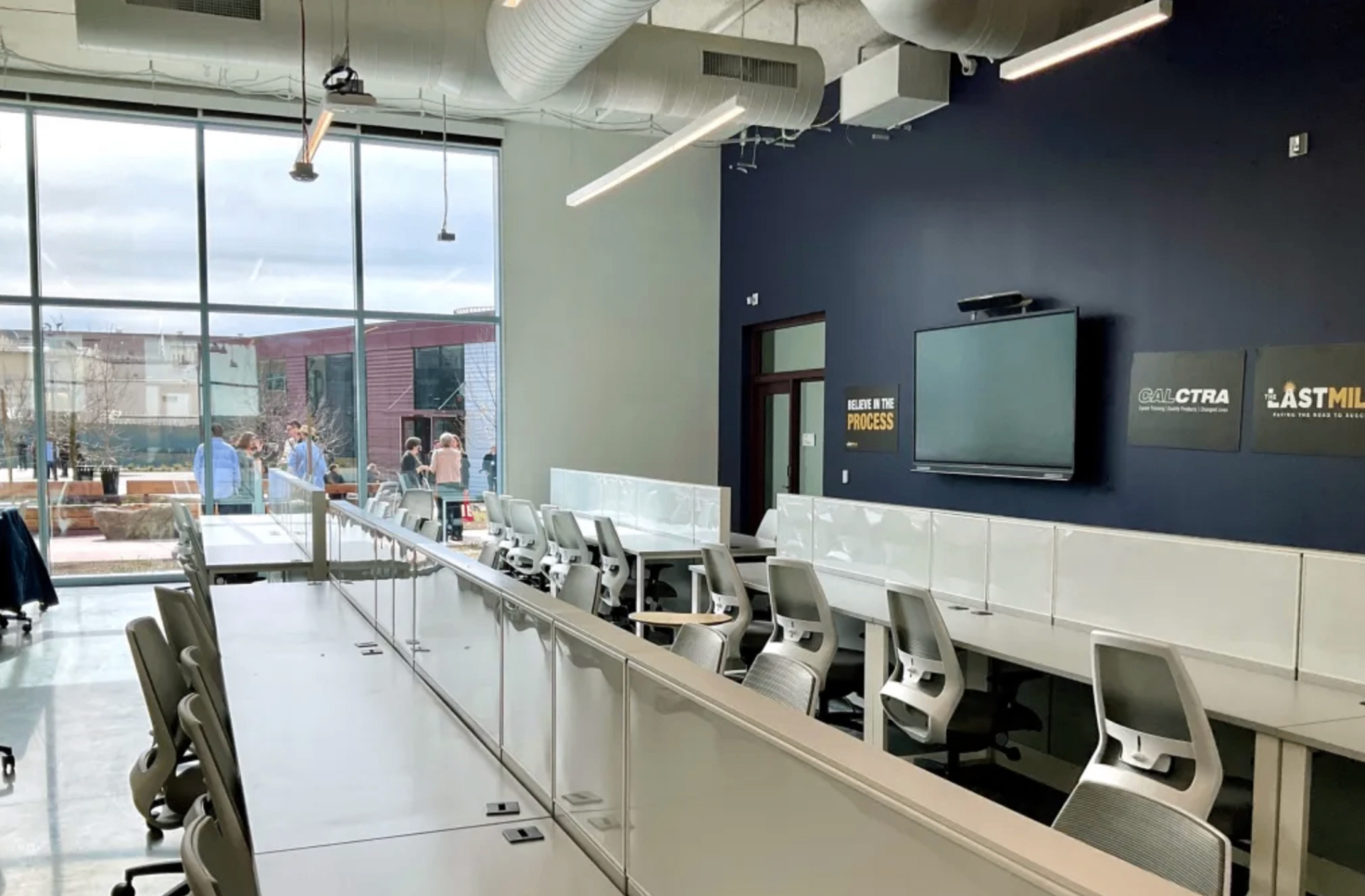
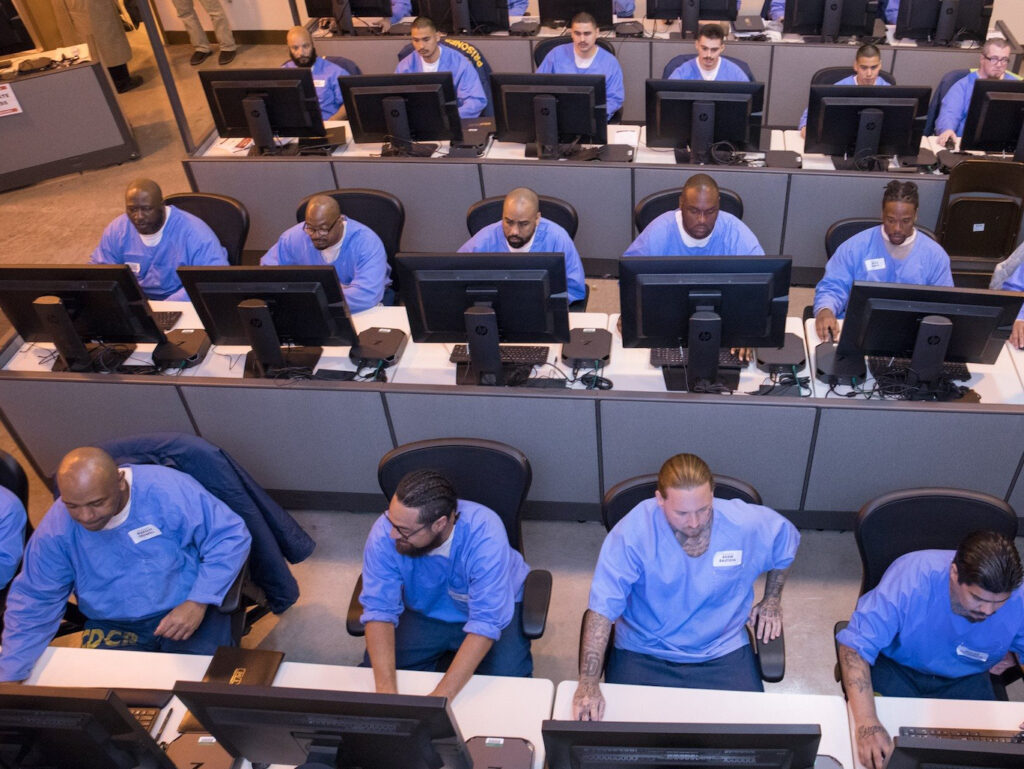
The Last Mile significantly shaped the use of technology and education in the new learning environment. With over a decade of experience at San Quentin, the organization brought institutional trust and operational expertise to define the technical infrastructure and educational workflows for the modern classrooms.

Establishing the largest programmatic presence at the facility, The Last Mile went beyond traditional classroom delivery to create a technology ecosystem that mirrors contemporary professional environments. The goal was to ensure that students learn using the same tools and collaborative practices they will encounter after their release.
This evolution indicates a broader shift in how correctional education functions. Students no longer move from outdated classroom environments to modern workplaces. Instead, the learning environment itself prepares them for contemporary employment expectations.
The work completed in 2025 was intentionally focused on building the foundation required for meaningful expansion. Rather than pursuing growth for its own sake, The Last Mile invested in curriculum design, technology infrastructure, and operational systems that could support scale without compromising quality or outcomes. These efforts were undertaken with a clear understanding that the next phase of the organization’s impact would depend on readiness, alignment, and trust.
As a result, 2026 begins with a strengthened network of partners positioned to translate this groundwork into expanded opportunity. Collaborations with state Departments of Correction are moving from pilot programs to more durable, multi-site implementations, enabling consistent delivery of education and reentry support across facilities.
Employer partnerships developed over recent years are also deepening in scope and sophistication. In 2026, these relationships will support earlier engagement with students, clearer pathways from training to employment, and expanded access to roles across multiple industries. These partnerships reflect a shared commitment to fair chance hiring grounded in demonstrated skill, preparation, and accountability.
Philanthropic partners continue to play a critical role in this next chapter. Investments made in 2025 supported the development of the PATH curriculum, the San Quentin technology build, and the systems required to sustain reentry continuity. In 2026, this support enables innovation to move from concept to execution, including expansion into new states, the onboarding of additional facilities, and the refinement of technology platforms designed for national reach.
Together, these partnerships position The Last Mile to move from a year of building into a year of activation. The organization enters 2026 prepared to scale proven models, deepen impact across communities, and continue demonstrating that when education, employment, and reentry are designed as an integrated system, outcomes follow.